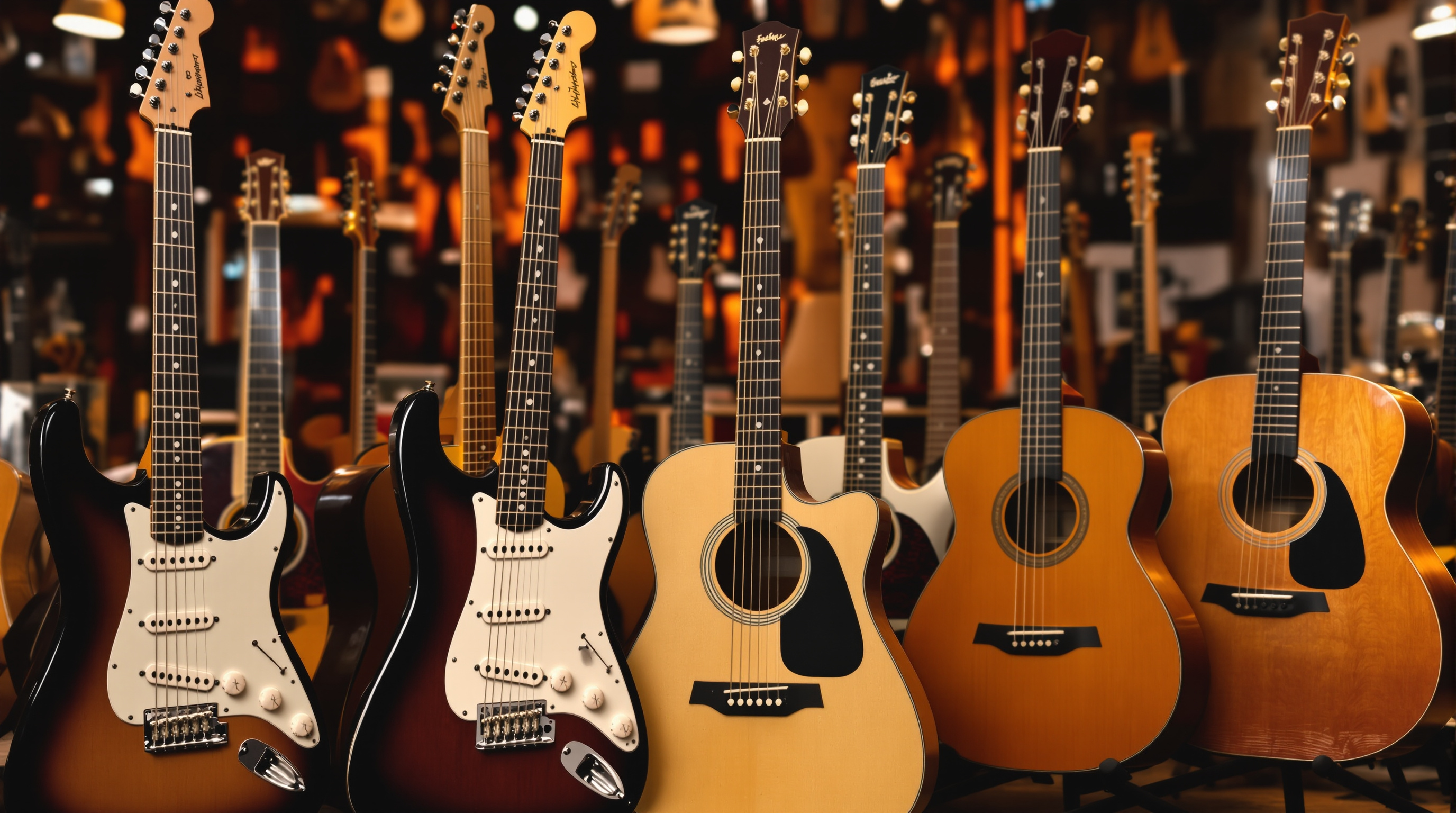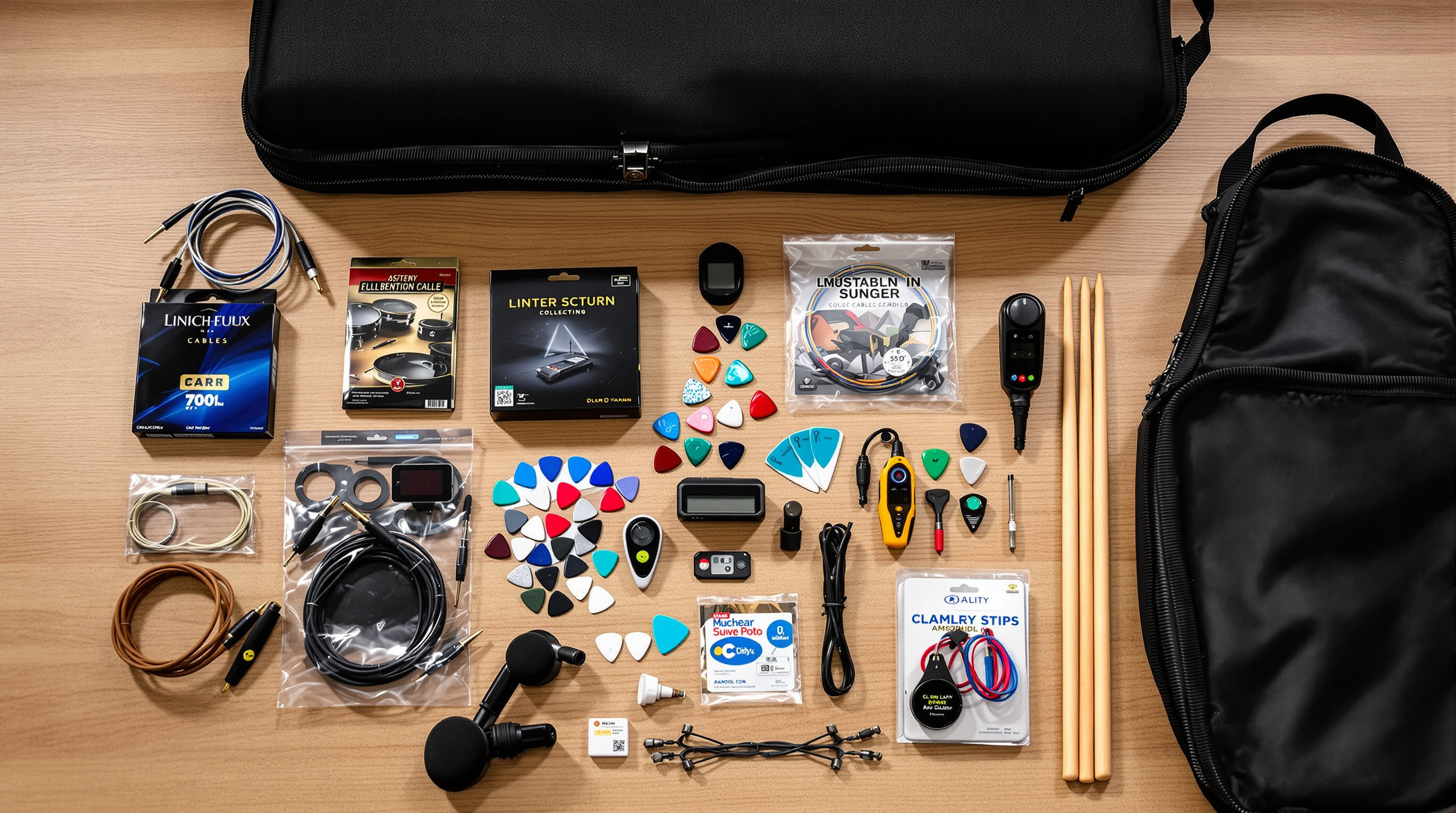
The right accessories enhance your playing experience and protect your instrument investment. From strings and picks to cases and cables, quality accessories make a real difference to your music-making experience.
Guitar Strings
Strings are the consumable that most directly affects your guitar's tone and playability. Electric guitar strings typically use nickel-wound steel, with gauges ranging from light (easier to play, brighter tone) to heavy (more resistance, fuller tone).
Acoustic strings come in phosphor bronze (warm, balanced) or 80/20 bronze (bright, punchy). Classical guitar nylon strings offer different tensions affecting playability and volume. D'Addario and Ernie Ball are leading string manufacturers.
Picks and Plectrums
Picks come in various thicknesses, shapes, and materials, each affecting tone and playability. Thin picks flex easily for strumming, while thick picks offer precision for lead playing. Nylon, Tortex, and celluloid each produce different tonal qualities.
Many players try various picks before finding favourites. Keep spares on hand - picks have a habit of disappearing during practice and performance.
Cases and Gig Bags
Protecting your instruments during transport and storage is essential. Hard cases offer maximum protection for valuable instruments, with plush interiors and secure latches. Gig bags provide lightweight portability with varying levels of padding.
Consider your transport methods and the value of your instrument when choosing protection. Even modest instruments benefit from quality cases that prevent damage.
Flying with an Instrument Case
Before choosing a case for a flight, measure its packed dimensions and ask the airline about bag numbers and sizes. GOV.UK's hand luggage guidance says to check allowances with the airline, and warns that security staff will refuse anything they consider dangerous even if it is normally allowed. Different rules apply to goods taken temporarily abroad for business, including instruments for a performance. Case choice therefore belongs alongside paperwork planning. The guide to travelling with musical instruments covers airline checks, accompanied baggage, freight and protected materials so you can work through the journey before packing.
Cables and Connectivity
Quality cables ensure reliable signal transfer without noise or dropouts. Instrument cables connect guitars to amps, while speaker cables connect amp heads to cabinets (never confuse these!). Patch cables link effects pedals.
Invest in quality cables with durable connectors and shielding. Poor cables cause frustrating intermittent problems that can be difficult to diagnose.
Stands and Supports
Guitar stands keep instruments safely accessible for practice. Wall hangers save floor space. Music stands hold sheet music and chord charts. Keyboard stands and benches support proper playing posture.
Quality stands prevent instruments from falling and suffering damage. Consider padding and stability when choosing stands for your valuable instruments.
Tuners and Metronomes
Accurate tuning is essential for good sound. Clip-on tuners work in noisy environments by sensing vibrations. Pedal tuners integrate into pedalboards with muting capabilities. App-based tuners offer convenience for casual practice.
Metronomes develop solid timing - perhaps the most important skill for any musician. Traditional mechanical metronomes, electronic models, and apps all serve this purpose effectively.
Maintenance Supplies
Regular maintenance extends instrument life and playability. Guitar polish and fretboard conditioner keep instruments looking and playing their best. String cleaners extend string life. Drum key sets enable quick tuning adjustments.
Basic maintenance supplies are inexpensive insurance for your instrument investment. Learn proper cleaning techniques for your specific instruments.
Humidity, Cases and Storage
The accessory that saves the most instruments is the least exciting one: a case that actually gets used. Wooden instruments move with the moisture in the air, and the damage is slow enough that most owners never connect cause to effect. Acoustic guitars are happiest somewhere around 45 to 55 per cent relative humidity. Below that, tops sink, action drops, fret ends start protruding past the edge of the fingerboard and, eventually, cracks open along the grain. Above it, tops swell and the action climbs. A hard case plus an inexpensive case humidifier and a small hygrometer costs less than a single repair, and a wall hanger in a room with a radiator under it is a slow way to ruin a good instrument.
Cables: The Cheapest Real Upgrade
Cables are where most players under-spend and then blame their gear. An intermittent instrument lead produces crackle, dropouts and hum that people routinely misdiagnose as a failing amplifier or pickup. You do not need boutique cable, but you do need decent connectors and strain relief at the plug, which is where almost every lead dies. Keep a known-good spare in the gig bag purely as a diagnostic tool: swapping the cable first turns half of all live faults into a ten-second fix.