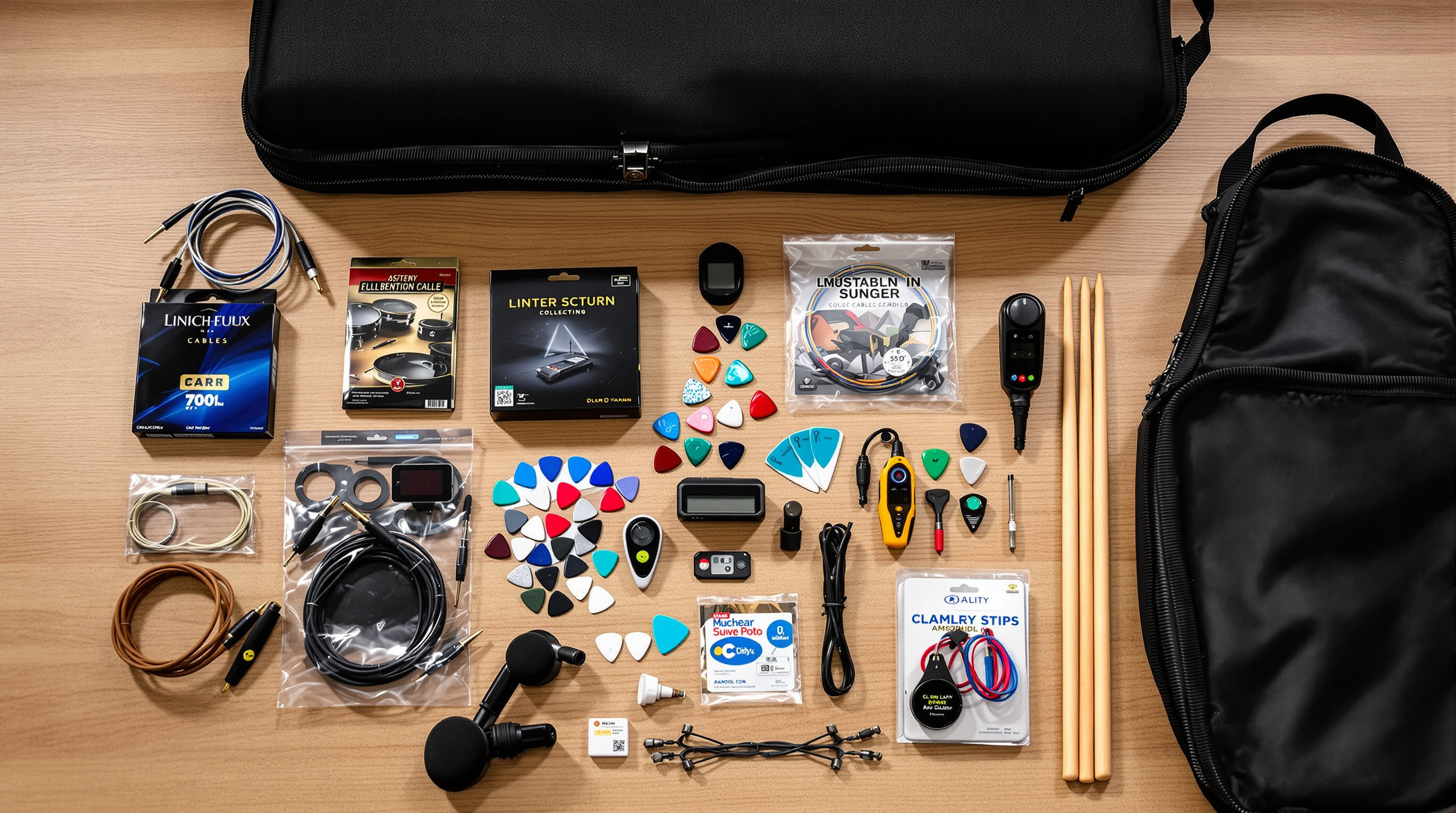
Plan an instrument's journey alongside the performance itself. Begin with how it will travel: in your baggage, in a vehicle that stays with you, or separately as freight. Then consider the airline allowance, the customs requirements along the route and any protected materials in the instrument. Those questions deserve their own checks before you choose a case and pack it.
Before You Fly
GOV.UK's hand luggage guidance says to check with the airline how many bags you can take and what sizes are allowed. Measure the packed case, including protruding handles and pockets, so you can ask about the item you actually intend to carry. Write down your questions before checking the allowance.
The same guidance warns that airport security staff will not let through anything they consider dangerous, even if it is normally allowed in hand luggage. Review what is inside the case as well as the case itself. An airline's baggage allowance does not answer that separate security question.
GOV.UK also points out that different rules apply when goods are taken temporarily abroad for business, giving musical instruments for a performance as an example. Treat the purpose of the journey as part of the planning. Alongside bag dimensions, note where the instrument is going and whether it will remain with you throughout.
Touring in Europe: Temporary Admission and ATA Carnets
GOV.UK's touring guidance for musicians says to check the customs requirements of each country visited when taking instruments or equipment temporarily out of the UK to work, perform or tour in the EU, Switzerland, Norway, Iceland or Liechtenstein. Make a route list before checking the requirements, so each country is considered.
The guidance distinguishes accompanied instruments from unaccompanied freight. Accompanied means carried by an individual in personal baggage or in a vehicle that travels with that individual throughout the journey. Describe the whole transport arrangement when checking which procedure may apply, rather than just the departure from the UK.
For accompanied instruments, temporary admission may be available by using the green or "nothing to declare" channel, or making an oral declaration to a Border Official. This can apply to instruments and equipment for personal or business use, and may mean an ATA Carnet is not required. The guidance describes a possibility to check against the destination's requirements, rather than an instruction to assume the green channel always applies.
Unaccompanied instruments are moved as freight by a haulier or transport operator without the individual present. An ATA Carnet can be used as a temporary-admission procedure for that arrangement, and there is a cost. If no temporary-admission procedure is used, you may have to declare the instruments and pay duties under the destination's customs rules every time they pass through customs.
A practical planning sheet can put each country beside the transport arrangement and the procedure you need to check. If part of the journey changes from accompanied baggage to freight, revisit that part of the plan before travelling.
Instruments Containing Protected Materials
Check whether the instrument contains materials covered by CITES before planning repeated border crossings. GOV.UK's CITES guidance describes a travelling exhibition certificate for repeated movements, including touring orchestras. It is valid for three years and covers movements within that time. If you do not own the specimen, you must obtain the owner's written authorisation to apply on their behalf and submit it with the application.
If the specimen is a musical instrument and the movement is not for commercial purposes, a musical instrument certificate can be used instead. There is no fee for that certificate. Check that condition against the intended movement; the instrument's use for music alone does not answer it. The guide to ivory, rosewood and instrument materials explains the separate questions involved in buying or selling older instruments.
Packing and Planning
Make an inventory of the instrument, accessories and cases you intend to take. Keep it beside the route and transport notes, and check it again before packing. Separate questions about what is in the baggage from questions about its size, so neither gets overlooked when you speak to the airline.
Choose the case around the journey you have checked. Note its packed dimensions, how you will carry it between stages and what you need to access without unpacking the instrument. Keep relevant paperwork organised and accessible alongside the journey details.
Before departure, compare the plan with the actual booking and packing arrangement. Work through any change of route or transport method, particularly a move to freight, while there is time to check the applicable guidance. Case choice, customs planning and protected-material checks should all describe the same journey.